

How To Draw Over Video In After Effects
Rotoscoping is a technique of drawing over the frames of a video to create a realistic animation. It'southward a great style to create a professional-looking animation without having to organically draw each private frame—and yous tin can do it using Adobe Later on Effects.
You lot might believe that animators always draw their characters from scratch, just many kickoff off by tracing a video reference frame-by-frame. Rotoscoping is time-consuming, but it doesn't require any drawing ability and often leads to a polished-looking final product. You can utilise this tutorial with any video you have on-hand. I used an iPhone video of my friend dancing, but you can search for something specific on the net and utilize that besides. (And, fun fact: Since we will be drawing over the video, there are no copyright issues with using someone else's footage for this project! Simply be sure to hide the actual video in pace six.)
- Bring your video into After Effects and choose a small portion to animate.
To brainstorm, drag your reference footage into Adobe After Effects. Create a composition from the video layer. Beware—rotoscoping is a tedious process. Animating ane 2nd of movement might have you as long every bit thirty minutes, then don't select a long clip unless you have enough of fourth dimension on your easily.
- Double-click the brush tool (
 ) on the video to create a paint layer.
One time this is created, you tin select your paintbrush also.
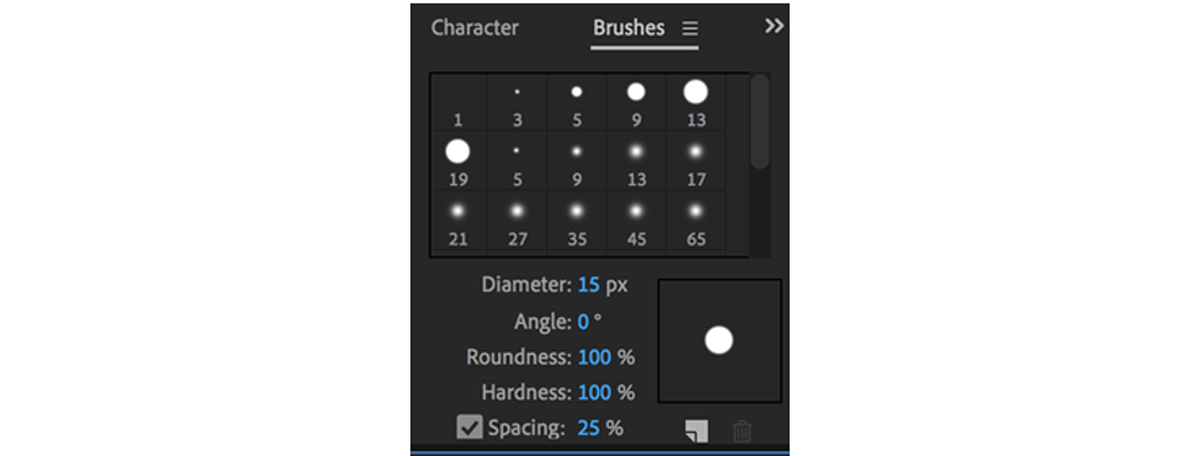
In this example, I created my black outline using a brush with a 15 px bore. The colour scribbles beneath were roughly twice equally thick. You can mess around with the settings in this menu and utilize whatever y'all would like.
- Gear up your frame duration in the "paint" panel.
This volition bespeak how many frames of motility your paint strokes volition exist on-screen for. The lower the number, the longer it will accept yous to animate—but the more complex the animation will be. For fast-moving motility, you volition want to piece of work with single frames. Notwithstanding, slower video footage works fine with a frame elapsing of 2 or even 4. It's okay to switch the frame duration throughout this project depending on the speed of the video's move.

In this example, my dancer's arms movement faster than his legs. For most of the video, I used a frame duration of one for the upper body and 2 for the lower torso—though I used single frames for faster sections of legwork equally well.
Once your paintbrush has a color, size, and duration, you may brainstorm painting over your first frame!
- Employ the control cardinal and pointer keys to accelerate to the next frame.
If you take finished your first frame, press the control and arrow keys at the same time to skip to the next frame in the reference video. (If you are using a frame duration of 2, you lot'll have to printing the correct arrow key twice, since yous're skipping 2 frames.)
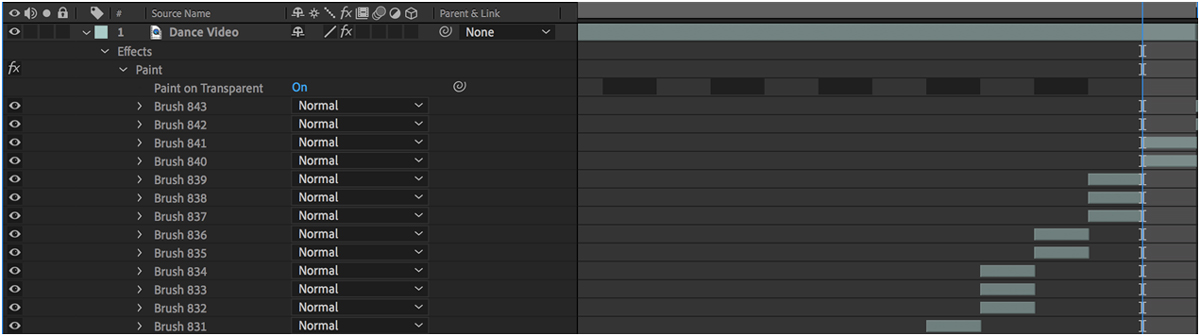
To delete a brushstroke or change its elapsing, click the down arrow abreast "effects" in your timeline window. Open the paint layer. Y'all should be able to see all of the brushstrokes you have created, each spanning the number of frames it occupies onscreen. Curl until you lot notice the brush you would like to delete or modify. Y'all can delete a brush using your computer's delete cardinal or modify the length of a brush by dragging the beginning and endpoints back and forth in the timeline.
- Make the video invisible.
For most rotoscoping projects, yous'll want to remove the original video reference and add a groundwork of your own. Open the paint layer, similar nosotros did in the previous step, and change "pigment on transparent" from off to on.

- Click back into the main composition to view your blitheness.
Close the paint layer by going back to your original limerick. (The tabs usually appear along the pinnacle of your project window.) Elevate the playhead to the beginning and printing the spacebar to watch your animation from commencement to end.

Source: https://makeitcenter.adobe.com/en/blog/rotoscope-after-effects.html
Posted by: garciajacessid.blogspot.com
0 Response to "How To Draw Over Video In After Effects"
Post a Comment